Creative Direction & Design

Design is the most visible part. The practice runs deeper.

Broadcast production, interactive media, consumer packaging, and mass retail. Thirty years of creative work that ran from first concept through every proofed sheet.

TL;DR

> Thirty years of creative work that doesn't resolve into a single discipline. Design is the most visible part of it. It has never been the whole thing.

  • Grew up in a working commercial studio. Film chemistry, pre-press, and design tools before there was a professional reason to know them.
  • BFA in Computer Art from SCAD, where commercial instinct was stripped of shortcuts and rebuilt as creative judgment.
  • Post-production and show graphics on Game Warden Wildlife Journal, a nationally syndicated wildlife program. Graphics and production on Eli Lilly's first long-form pharmaceutical infomercial, the first of its kind, FDA-cleared for broadcast.
  • Creative director at iLrn, leading a full multimedia production team — one of the first learning management platforms ever built. $22 million in venture backing. Over 400 American colleges.
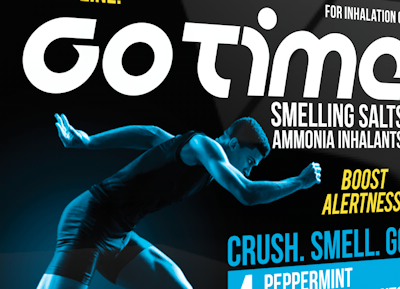
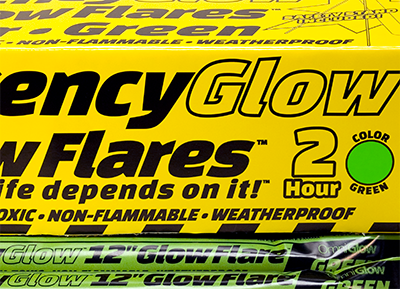
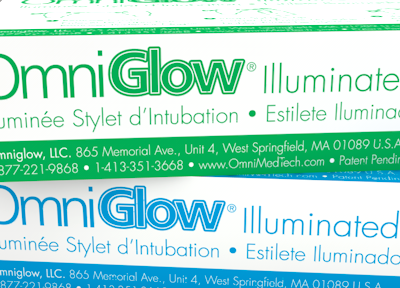
  • Ten years as Creative Director at OmniGlow — concept through press check, consumer novelty to medical device, mass-market retail ($500K to $7M at Walmart in two years), and a DTC eCommerce build that generated close to a million dollars in new annual revenue.
  • Creative director for Perpetual Groove since 1999: brand identity, community platform, and the 20th anniversary vinyl release of their breakout album.

The full story is below.

Formation

The technical depth came first. SCAD took it apart.

A commercial photography studio from childhood, then Bloom's and Pioneer Packaging. By the time I reached SCAD as a Junior, I had more commercial production experience than most classmates, and the shortcuts that came with that depth. SCAD stripped them. What was left was judgment.

Case Studies

Digging into the archives.

Television

Syndicated broadcast. Post-production, show graphics, and the first FDA-reviewed pharmaceutical long-form in the industry.

Creative Street had just launched Edit Pointe post-production and was in pre-production on Game Warden Wildlife Journal, a nationally syndicated half-hour wildlife program that ran 1998–2002. A weekly syndicated show runs the same order every week: tape logging, rough cut assembly, delivery to online editors, coordination with music composers, final satellite upload. Three segments per episode. Working with the Art Director on the show's on-air graphics led to the call for the Lilly project.

Eli Lilly's first long-form pharmaceutical infomercial for Prozac was the first of its kind in the industry, a distinction that is easier to say proudly than it was to explain. I handled all the graphics, including what was likely the first full unabbreviated drug details crawl produced for broadcast. The FDA reviewed the program before it was cleared for air — the first time the creative work had to answer to something other than an audience.

Case Studies

Digging into the archives.

iLrn

A month in, the Art Director resigned. I could talk a creative decision through with anyone in the room. I said yes before I'd decided I should.

I had come in as a Learning Resource Designer. I'd been around working art directors long enough to understand how they thought — not just how they worked. The team had strong production skills. The gap was someone who could hold a creative decision, own it, and defend it to a client or director without blinking. I performed that confidence before I fully had it. Creative direction became mine. I led content developers, interactive designers, staff artists, and engineers producing learning resources across introductory humanities for higher education.

Digital Learning Interactive became iLrn (the Interactive Learning Resource Network). I worked with Zefer to refactor the product's visual system and identity. 'Knowledge Unbound' was the tagline we landed on, a claim about access and a rebuke to the textbook model. Working with engineering on the site architecture, I built the reusable module shell: ActionScript-driven interactive timelines and maps that loaded any content through an XML metadata packet. The architecture was fixed. What it held was not.

School of Athens started small, one of the more contained modules. Every figure in Raphael's painting was made clickable, each philosopher triggering their writings and their relationships to every other figure. It grew past the original brief and shipped as a learning module and a standalone CD-ROM. It's still one of the things I'm most proud of. The Harlem Renaissance project was iLrn's endgame: Henry Louis Gates as authorial voice, a dashboard built around a persistent annotated timeline where every point could trigger video, audio, source documents, or quizzes, each connected to everything else. Its interface was the most tightly integrated work the team had made. Prototypes and demos were stunning. The dotcom collapse ended it before it shipped. I have fragments. Pretty demos, nothing more.

$22M
venture backing
400+
American colleges

Case Studies

Digging into the archives.

OmniGlow

Ten years. Consumer novelty to medical device.

Frank Carter, who had moved from Pioneer Packaging to OmniGlow as Creative Director, called me while edufusion was winding down. He had ideas for OmniGlow's first LED product line but no concept drawings. I went home and came back with Cinema 4D renderings of his ideas and some of my own. A month later I was presenting those concepts to OmniGlow's owner. That was the job interview. OmniGlow had grown from a US government and American Cyanamid partnership into the world's leading chemiluminescent manufacturer, holding patents on most color formulations and a range of utility patents extended from the core chemistry.

I came in as New Product Developer and worked in the model shop under a longtime industrial designer, learning lathes, drills, and band saws before 3D printing made physical prototyping accessible. Concept renders and prototypes went to internal stakeholders and customers through presentations I built and ran. I filed the patent applications. The illuminated drink container and dispenser line, the light-up pour spout, manufactured and later cited as prior art for subsequent LED patents.

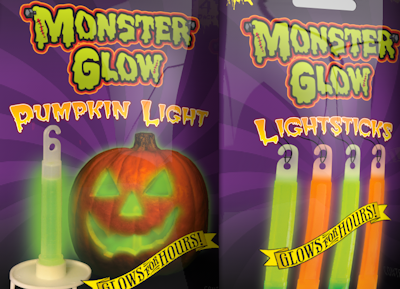
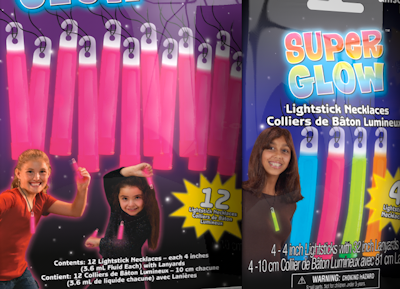
OmniGlow split in 2006: Omniglow LLC retained novelty, consumer safety, and biomedical lines; Cyalume Technologies took the military and industrial business. My scope grew. The SuperGlow line for Amscan was a brand system built from nothing: visual identity, retail architecture, and a product design language that held across 50 individual SKUs placed permanently in every Party City nationally, with a style guide that extended it seasonally and across demographics. I designed the floor and shelf display systems that held it in-store. Packaging specification, production printing processes, and regulatory compliance (CPSIA, ASTM toy standards, FTC) ran from concept to the proofed sheet. The Walmart account grew from $500K to $7M annually over two years through sustained line expansion and packaging revision across the seasonal calendar. Monster Glow, a full rebrand built to compete on impact in a Halloween aisle flooded with commodity product, was one of many.

Product categories ranged from consumer novelty to biomedical device to agricultural equipment. Building the eCommerce store closed the chapter: a full direct-to-consumer and bulk-wholesale Magento build I designed alone, as expiring patents were making glow a commodity. Close to a million in the first year. Five million over its life. None of it had existed before the platform did.

10
years as Creative Director
500+
SKUs, All Verticals
$7M
Walmart account at peak
~$1M
eCommerce launch revenue

Case Studies

Mestek

Commercial photography alongside my father. A visual system they still use.

My father shot. I directed. Thirty years of being in the same rooms together made that division of labor immediate. Mestek manufactures large-scale HVAC equipment. The shoots happened in their warehouse: improvised lighting rigs, setups designed on the spot, equipment moved between shots by the same crew that ran it daily.

I art directed the shoots, handled all post-production retouching, and took on Mestek as a full design client: product lines across multiple divisions, four-color brochures, one-sheets, revised logos, and a visual system that unified materials across divisions, one they still use. I wrote all the copy. The Mestek work confirmed what had always been true: the writing and the design were the same act.

Case Studies

Digging into the archives.

Perpetual Groove

Twenty-five years of creative direction for a band that grew from a Savannah bar act to a national touring institution.

Perpetual Groove was founded by SCAD students in 1997 in Savannah. My best friend Ben Ferguson discovered them in 1999 and became their manager. I became their Creative Director in everything but formal title, and still am.

We built a community platform before community platforms were a product category: a full website with active content, a database of every setlist and show, and a fan forum we named Talking in Place. The band were active members. We kept the line between artist and audience as open as it could be, and the community grew nationally. The most recent project was the 20th anniversary vinyl release of Sweet Oblivious Antidote, the band's 2003 breakout album, released as a double LP in 2023, remixed and remastered. Ben and I updated the packaging together. The goal was to add without erasing.

Case Studies

Digging into the archives.

Capabilities

These disciplines didn't accumulate in sequence. Post-production before brand work, packaging before digital, patent filing before copywriting. The work across thirty years ran deep enough in each area that each one informed the next — and the range is not a liability. It's the point.

Brand & Identity

  • Logo design and mark development
  • Visual identity systems
  • Style guide development
  • Brand architecture
  • Typography and type selection

Packaging & Print Production

  • Flexible packaging design
  • Retail display and shipper systems
  • Four-color process and PMS specification
  • Regulatory compliance (CPSIA, ASTM, FDA labeling)
  • Pre-press and press-check management
  • Planogram development

3D & Product Development

  • 3D modeling and rendering
  • CAD and product design
  • Physical prototyping
  • Concept development and stakeholder presentations
  • Patent application preparation

Photography

  • Commercial shoot art direction
  • Post-production retouching
  • Product photography
  • Location and warehouse shoots

Digital & Interactive

  • Web design and front-end development
  • eCommerce design and build
  • XML-driven content architecture

Adobe Creative Suite

  • Full mastery across all components
  • Deep proficiency: Photoshop, Illustrator, InDesign, Lightroom

Broadcast & Post-Production

  • Show graphics (syndicated broadcast)
  • Offline edit assembly and delivery
  • Motion graphics
  • Pharmaceutical broadcast (FDA-reviewed)

Writing

  • Consumer product copy
  • Clinical and regulatory documentation
  • Educational content
  • Campaign and brand copy

If you need a creative partner who has been inside every part of the process, reach out.

Get in touch